ATEX certification and protection concepts explained

Once you know which zone an area falls into and which ATEX category of equipment it needs you will want to work out how your equipment is certified for those environments and what mechanisms ensure the equipment is safe

What are the ATEX directives

ATEX refers to two separate pieces of EU-derived legislation, each covering a different part of the picture.

The Workplace Directive (99/92/EC)

This is the directive DSEAR implements in the UK. It places the zoning and risk assessment duties covered in Part 1 and Part 2 of this series on employers.

The Equipment Directive (2014/34/EU)

This works in tandem with the workplace directive, setting the health and safety standard that products must meet before they can be sold for use in an explosive atmosphere. (Implemented in the UK as the Equipment and Protective Systems Intended for Use in Potentially Explosive Atmospheres Regulations 2016)

How equipment is certified

Certification is the manufacturer or supplier’s responsibility, not the end users. The category (and subsequent level of risk) defines how a product is certified.

  • Category 1 equipment requires examination and ongoing quality assurance by a Notified Body, an independent, accredited certification organisation. The equipment
  • Category 2 equipment generally requires Notified Body examination.
  • Category 3 equipment can be self-certified by the manufacturer.

Once certified, equipment is marked with the appropriate conformity mark and the “Ex” symbol, alongside details including its equipment category, and specific protection concept.

Implemented in the UK as the Equipment and Protective Systems Intended for Use in Potentially Explosive Atmospheres Regulations 2016

ATEX protection concepts explained

The category system tells you how much scrutiny equipment has been through. Protection concepts tell you how it actually prevents an explosion. These are defined in the IEC 60079 series of standards. Some common safety mechanisms include:

  • Ex-d — Flameproof enclosures: Encloses ignition-capable parts inside a housing strong enough to contain an internal explosion.
  • Ex-e — Increased safety: Adds extra design margins, such as larger conductor sizes and stricter thermal limits, to prevent sparks and excessive surface temperatures from occurring in the first place.
  • Ex-i — Intrinsic safety: Limits the electrical and thermal energy in a circuit to a level below what’s needed to ignite the surrounding atmosphere, even under fault conditions.
  • Ex-t — Dust enclosure: Prevents dust from entering the enclosure in quantities that could form an explosive layer or cloud and keeps internal surface temperatures below the ignition point.

Which protection concept is right for your system?

The right approach depends on the equipment, the substance involved, and the zone it’s operating in. For most dust extraction systems, a combination of dust enclosure (Ex-t) and flameproofing (Ex-d) is used: the enclosure keeps dust out of ignition-capable components, and the flameproof rating contains any explosion that does occur so it can’t propagate through the rest of the system.

What this means for your extraction system

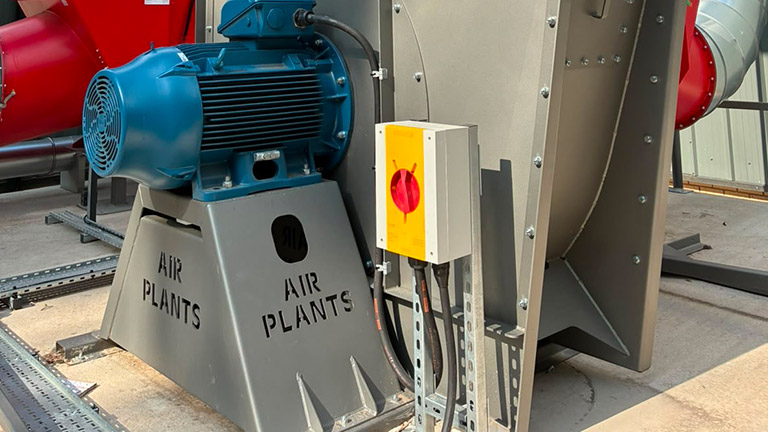
Extraction equipment are a common place to require these systems, since fans, filters and ducting are handling combustible dust directly. Ex-t dust enclosures and Ex-d flameproof housings are standard features on ATEX-rated extraction components for exactly this reason.

Ensure Your Extraction System Meets ATEX Safety Standards

Choosing the right ATEX-certified equipment is essential for managing explosion risks and maintaining a safe workplace. Our experienced engineers can help you specify an extraction system with the appropriate protection measures for your application. Contact our team to discuss your requirements.